The Sunday Shuffle of Household Goods
A small rearrangement can make a familiar room feel fresh, like turning the page of an old book.
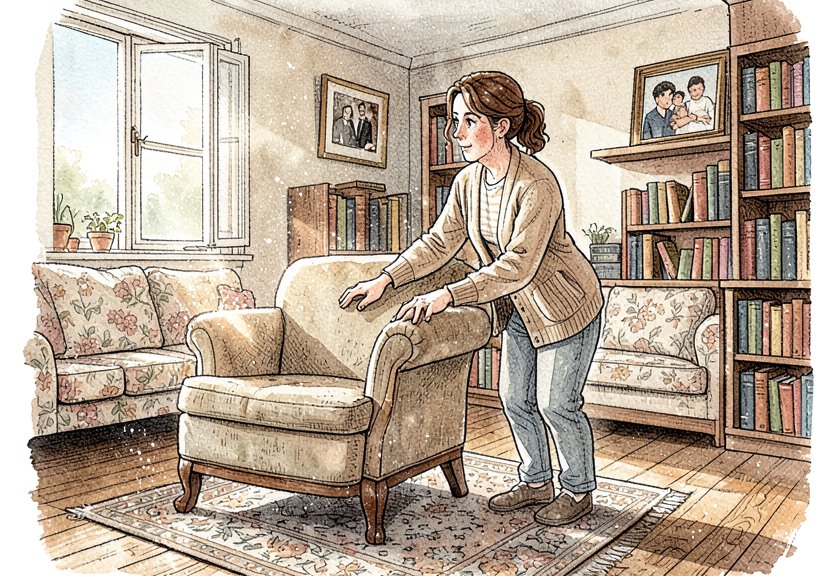
It is a quiet Tuesday afternoon when Sarah moves her heavy armchair three inches to the left. The shift is so small that no one else notices it, yet she feels a sudden sense of relief wash over her. For some people, the ritual of moving furniture is simply about reclaiming a small part of their own territory within a shared space. A couple living in the same house might push one table closer to the window, while the other leaves it exactly where it fell. They are not trying to change anything about their relationship, just the way light hits the floorboards each day.
Others turn this habit into a deliberate act of control over their environment, especially when life feels uncertain. When someone loses a job or watches news reports from distant lands, their living room can begin to feel like a place they have lost. Shifting the sofa against the wall or swapping out a bright rug for a darker one is a way of physically drawing boundaries around their inner world. The act itself becomes a silent promise that they are still capable of ordering their surroundings, even when the outside world seems chaotic.
A third reason is purely about memory and the stories that stick to objects over time. A bookshelf might have held first editions of novels years ago, but the books are gone now and only empty shelves remain. Moving that shelf to a different corner reminds the family of what used to be there, without needing to talk about it openly. The furniture holds the ghost of past conversations and laughter, and changing its position keeps those memories alive in a new shape.
Sometimes the motivation is as simple as a desire to see how different things look together. A room that has been arranged the same way for five years can start to feel like a museum exhibit rather than a living space. Walking through the doorway, someone might suddenly notice that the corner where they keep their coffee mug no longer catches the morning sun. One small change, like turning a large mirror to face the bed, can make an entire house feel new again without any real work being done.
There is also the element of play, a bit like rearranging toys after they have been put away. An adult might move a chair in front of the fireplace just to see if it blocks the view, then decide against it. The movement does not always lead to a permanent change; often it is a temporary experiment that ends with everything being put back. It suggests that the home belongs to everyone who touches it, and that no single arrangement is ever truly final.
So next time you feel the urge to shift something in your home, consider what that movement is really trying to say. Are you looking for a fresh start, or are you simply afraid of letting things stay as they were? The answer might be a little less clear than it seems, but the feeling of doing something with your hands is often enough to make a day feel lighter.