Why Meetings Run Late
The clock on the wall shows time passing, but no decision is made.
The meeting starts with a promise to finish by lunch. Five people sit around the table and open their laptops before talking. The chairperson says, "Let's begin with the agenda." Halfway through, someone asks for more time to explain their idea.
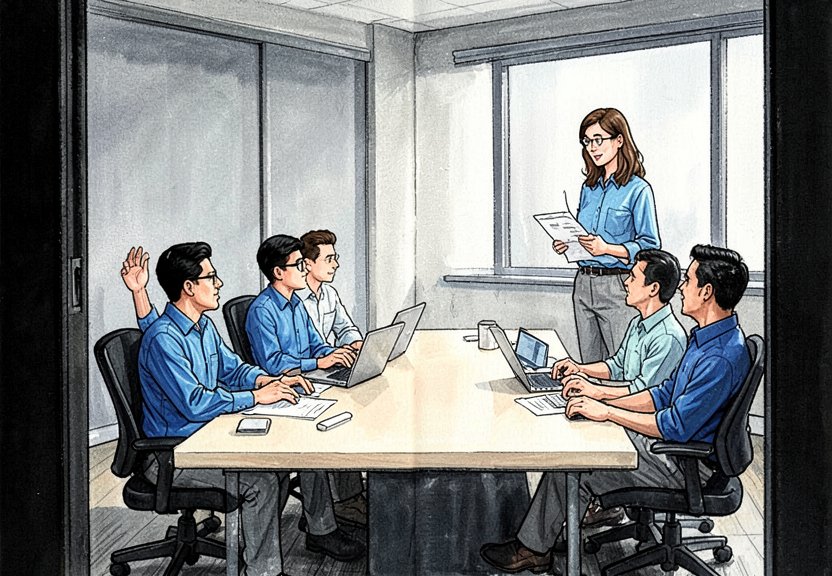
The first reason is a lack of clear goals. The agenda often lists too many topics for the time available. People try to discuss everything at once, and then they get confused about which point is most important. The meeting stops to decide what should be done first, and this takes a lot of time.
A second reason is the habit of not saying no. When someone raises an idea, others feel polite and do not want to say it is unnecessary. They agree with the wrong solution just to be friendly, and then they change their minds later in the meeting. This back-and-forth makes the time go by very slowly.
A third reason is that people come unprepared for the meeting. They arrive late, and then they ask others to repeat what has already been said. Instead of reading the report before arriving, they check it during the meeting while someone else is talking. This means everyone must wait for information that could have been shared before the meeting started.
The real problem is not the time itself, but how people handle it together. We all want to be thorough and helpful, so we keep talking longer than needed. Sometimes the meeting is long because it feels like a good idea to talk about everything. Do you ever feel that your meetings could be shorter if people were a bit more direct?